Fractal Encyclopedia
Plain-language guides to the shapes you can explore in Kaleidoscope: what they are, where they come from and where to look. Every page links straight to the matching view in the live explorer.
What is a fractal?
A fractal is a shape that keeps revealing new detail however closely you look. Zoom in on a circle and it flattens into a straight line. Zoom in on a fractal and you keep finding structure: more curls, more edges, more copies of what you started with. The word was coined in 1975 by the mathematician Benoit Mandelbrot, from the Latin fractus, "broken".
Many fractals are self-similar: a small piece looks like the whole. In the Sierpiński triangle the match is exact. In the Mandelbrot set, small copies appear everywhere, but each one is a little distorted. Fractals often have a dimension that is not a whole number: the Sierpiński triangle is more than a line and less than a filled region, at about 1.585. Nature offers approximations such as coastlines, ferns and river networks, but only across a limited range of scales. The mathematical shapes go on forever.
Most of the fractals here come from iteration: apply a simple rule to a number, feed the answer back in, and repeat. Each pixel of the picture is a point on the complex plane. The rule decides whether that point stays put or escapes to infinity, and the color says how fast. A tiny rule, applied endlessly, produces endless complexity. The one exception is the Sierpiński triangle, which comes from a purely geometric rule.
The encyclopedia
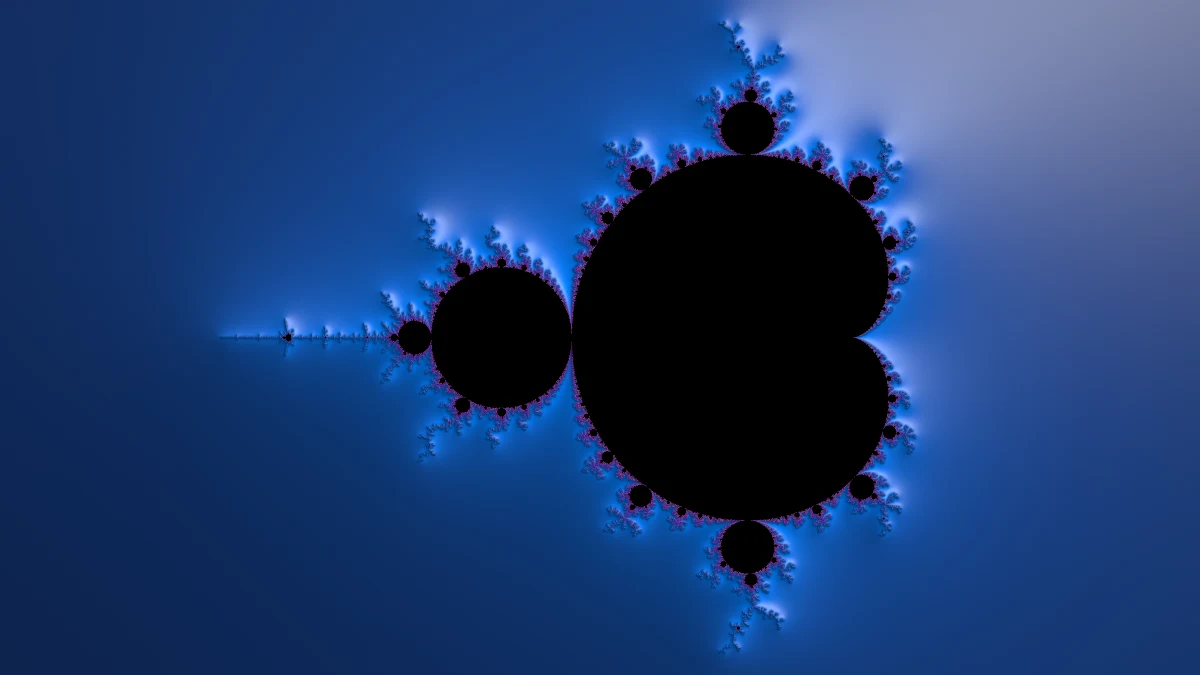
The Mandelbrot set
The most famous fractal: one line of arithmetic, an infinitely detailed boundary.
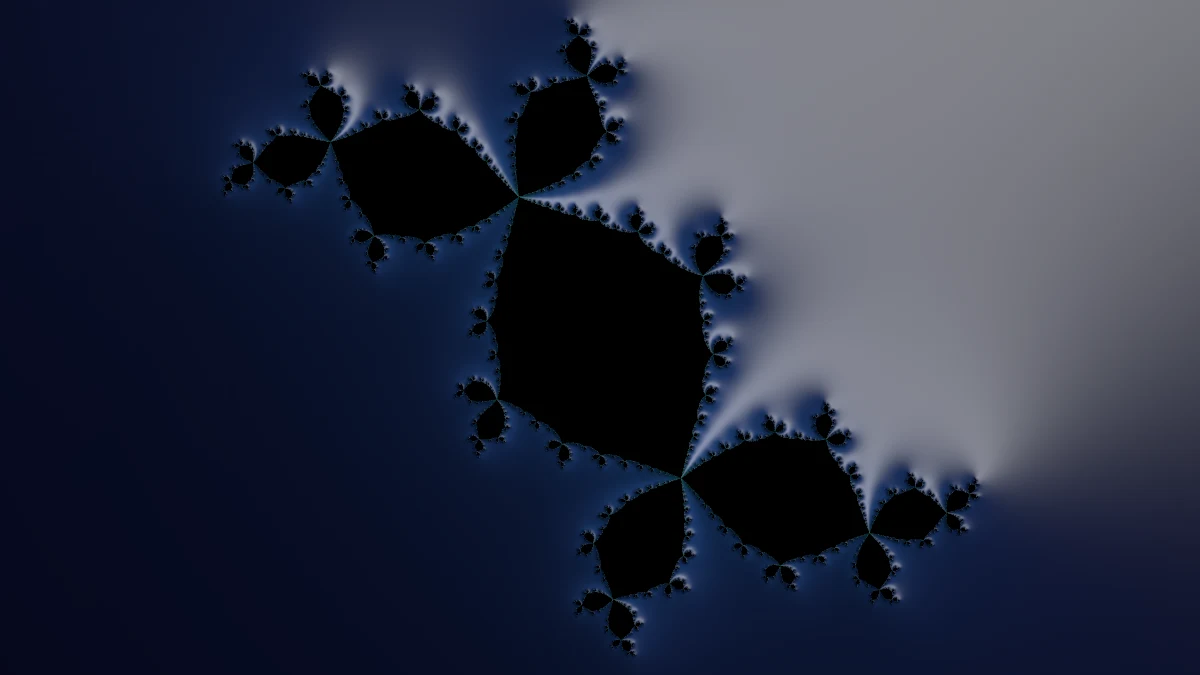
Julia sets
One shape for every point of the Mandelbrot plane: rabbits, dendrites and dust.
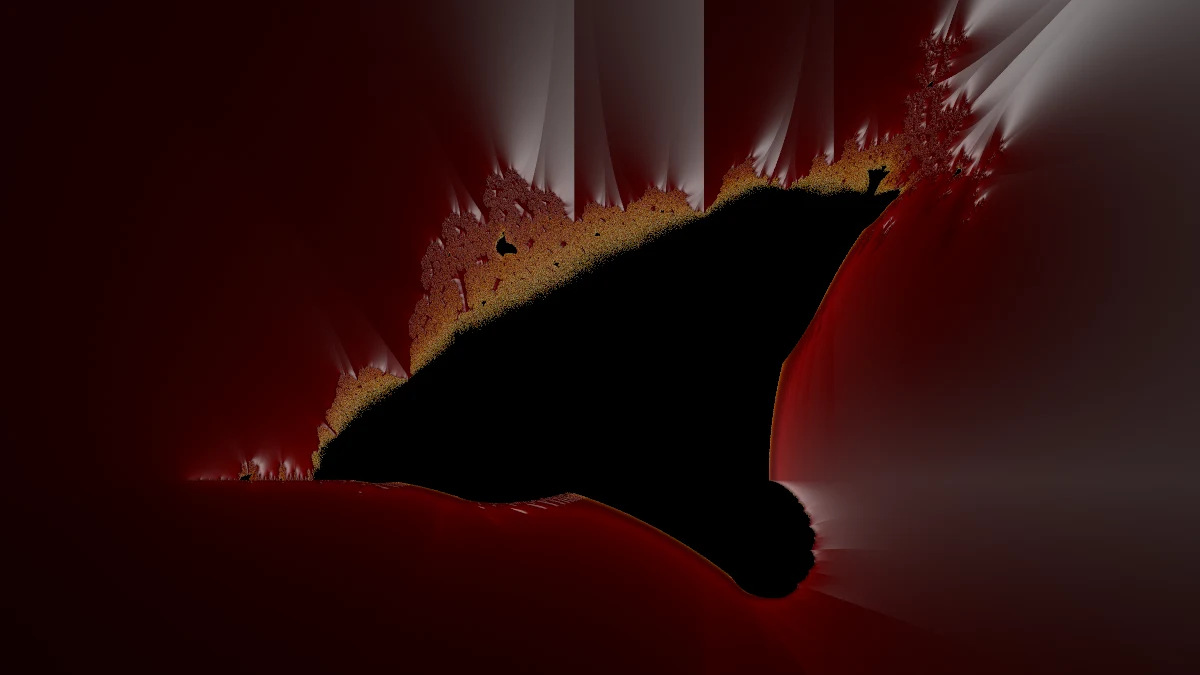
The Burning Ship
Fold the plane with absolute values and the heart turns into a jagged ship.
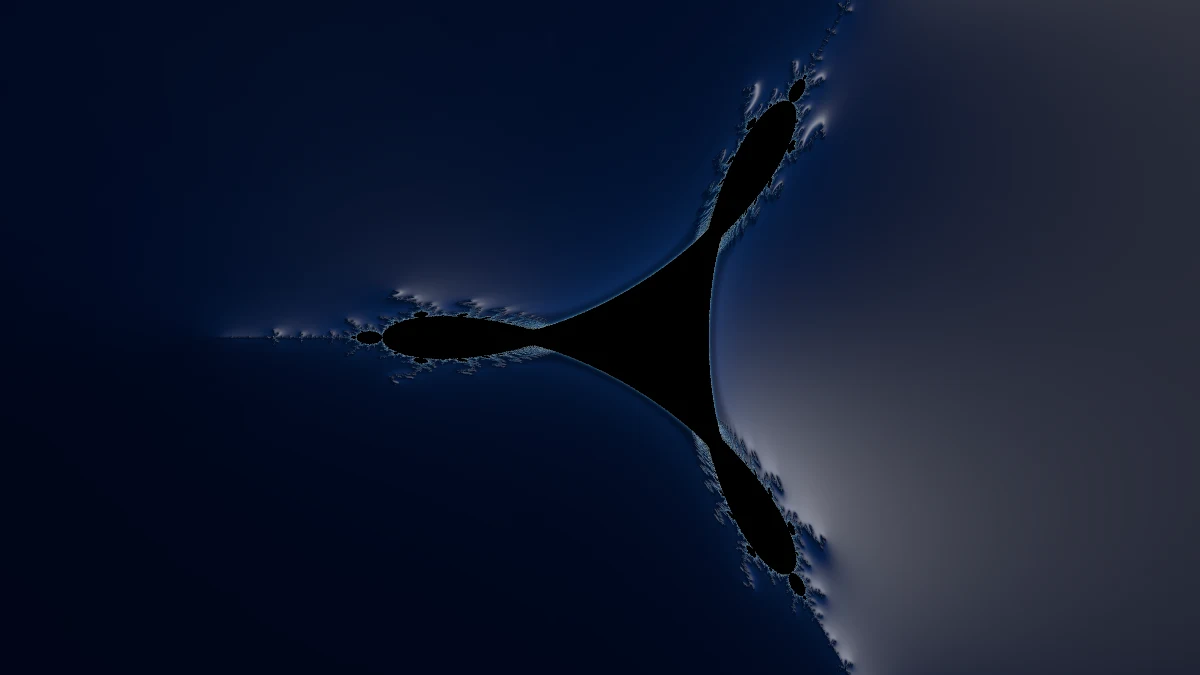
The Tricorn
Conjugate before squaring: a three-armed shape with three-fold symmetry.
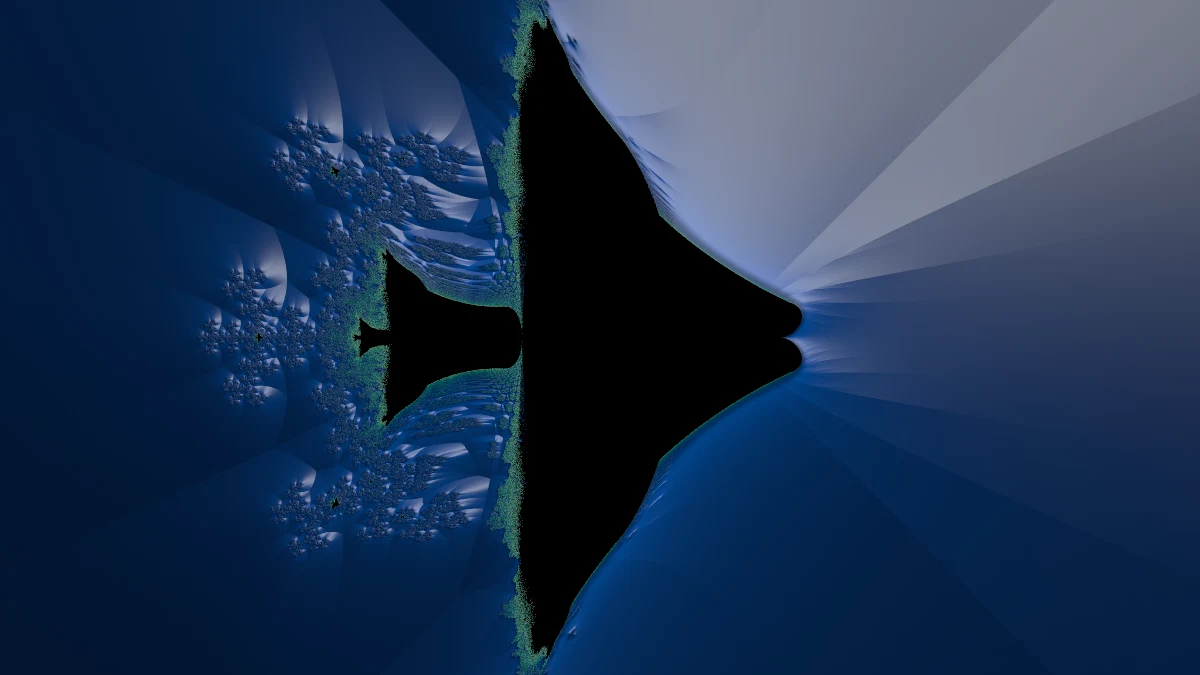
The Celtic fractal
Fold the real part after squaring: an arrowhead with tree-like clusters.
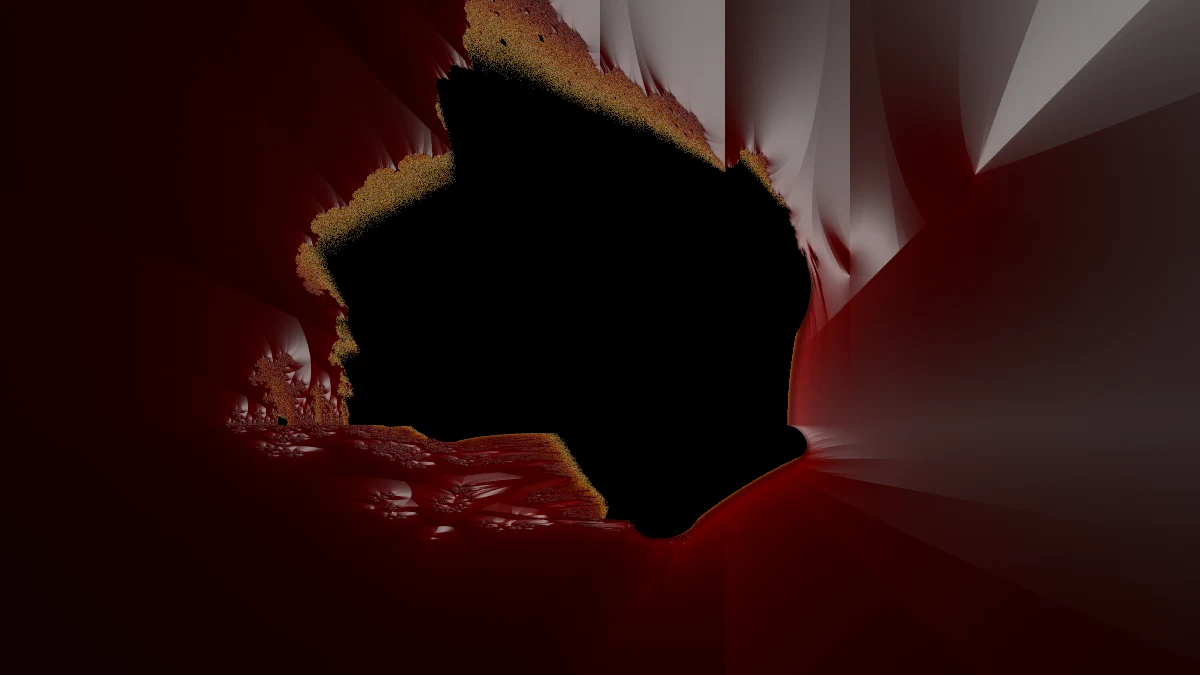
The Buffalo fractal
Folds before and after squaring make the most lopsided member of the family.
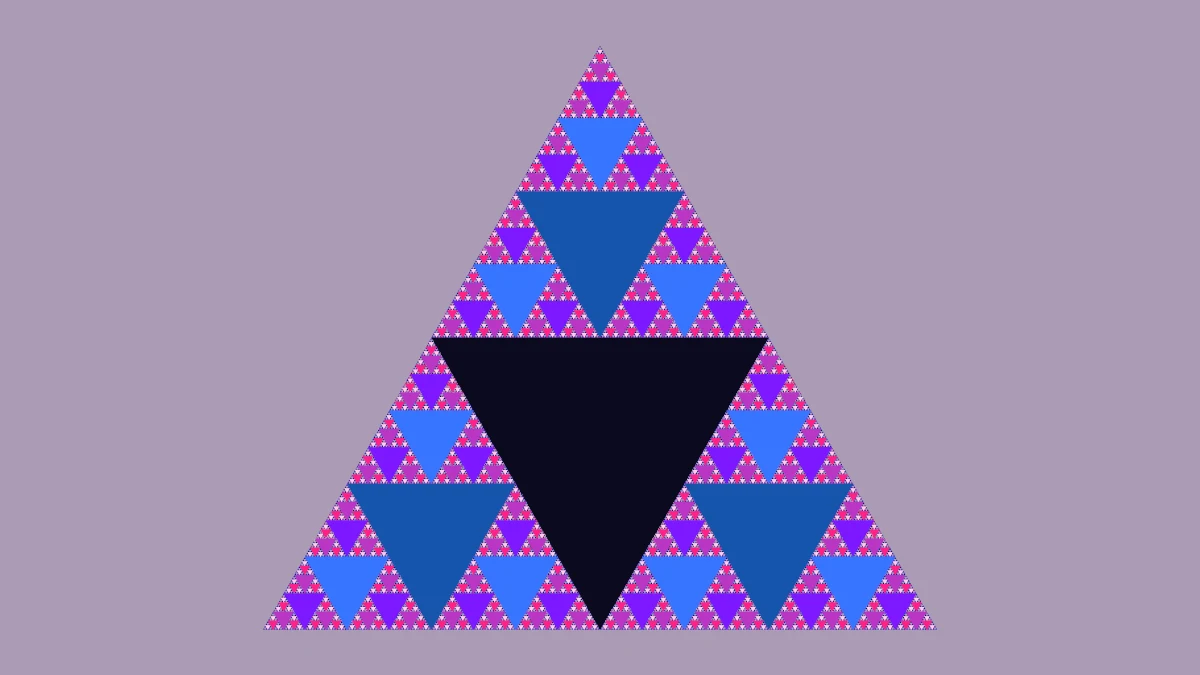
The Sierpiński triangle
A triangle of triangles, drawn exactly and zoomable forever.
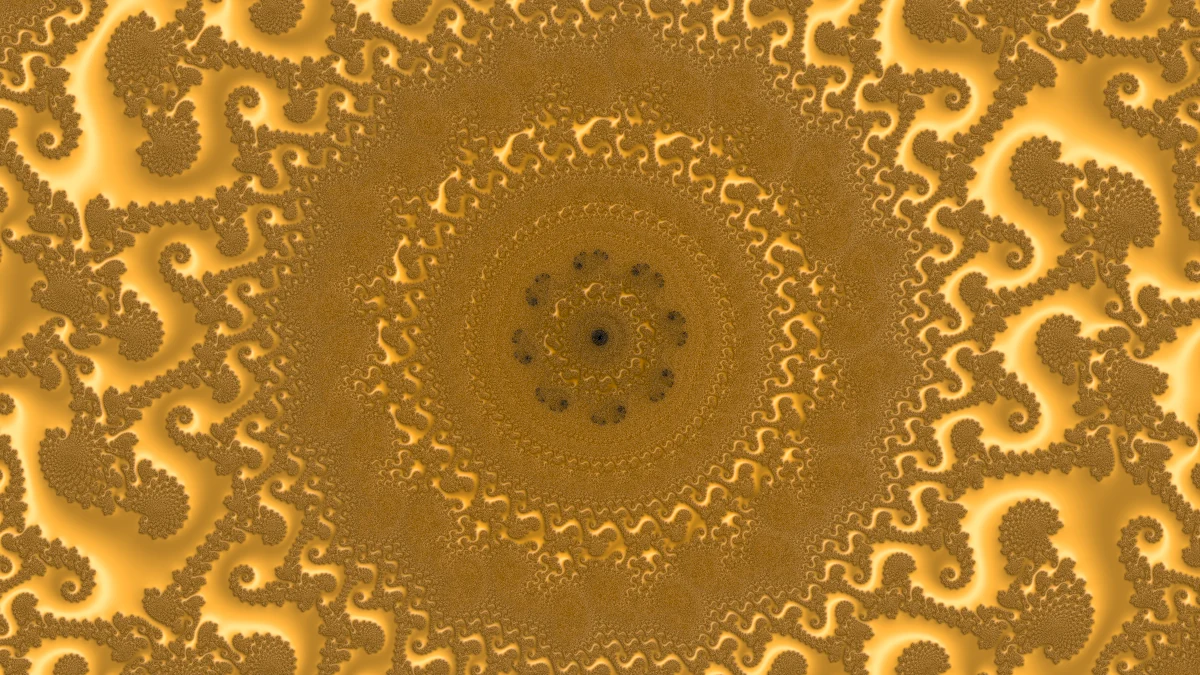
How the explorer works
Escape time, smooth color, relief lighting and perturbation for zooms to 10300.
Glossary
Plain definitions of the terms you will meet, from iteration to Misiurewicz point.
How to use the explorer
Every page here has buttons that open the explorer at an exact place. Once you are there:
- Pan and zoom. Drag to pan. Scroll, pinch or use + and - to zoom toward the pointer. Double-click zooms in; hold Shift to zoom out. Arrow keys pan and R resets the view.
- Julia sets. On a Mandelbrot-style fractal, hover over a point to preview its Julia set in a small window, and press J to open it full size.
- The side panel (P) holds the fractal choice, the power, the palette, color mapping, shading, anti-aliasing and engine. Its Explore section has a guided tour that flies between notable places.
- Color and view. C cycles the colors, H hides the interface, F goes fullscreen and ? lists every shortcut.
- Sharing. The page address stores your whole view, so Copy link shares it exactly. Export PNG saves a high-resolution image.
The explorer draws on your graphics card with WebGL2 and falls back to a multi-threaded CPU engine if that is unavailable.
Where to start
New to fractals? Begin with the Mandelbrot set, then its companion Julia sets. If you like the pictures more than the math, jump straight to the Burning Ship. For the story behind the pixels, read How the explorer works, and keep the glossary handy for unfamiliar words.